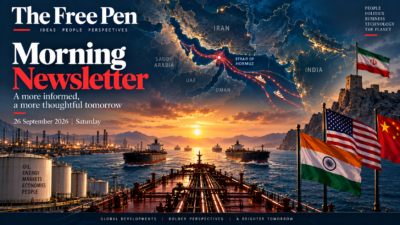
Ever since Iran has choked the Strait of Hormuz to escalate the global cost of the war Israel and the US mounted on it in February-end, shadow fleet has come back to news conversations. Some of the readers might recall its usage when Russia invaded Ukraine in 2022 and faced a range of sanctions as a consequence. So, we decided to break it down in simple words.
What it is
A shadow fleet is a large group of oil tankers that deliberately hide their identity to transport oil from countries under US or EU sanctions — primarily Iran, Russia, and Venezuela. These vessels turn off their Automatic Identification Systems (AIS) so their real location disappears from public maps, and spoof GPS signals to show a false position.
How it operates
Shadow fleet ships engage in ship-to-ship transfers in international waters to move petroleum from sanctioned sources to foreign buyers, concealing and falsifying the oil’s origins. Vessels frequently change their names and flags to evade tracking. The fleet is estimated at over 1,400 ships globally.
India’s current position
With war risk insurance costs rising sharply in West Asia, Indian buyers of both LPG and crude oil have been forced to depend on sanctioned vessels or shadow-fleet tankers. India has seized Iran-linked vessels earlier and is now openly buying Iranian crude via this ecosystem.
Why it matters
The shadow fleet represents a central contradiction in India’s energy diplomacy: commitment to global norms versus dependence on sanctioned supply chains.