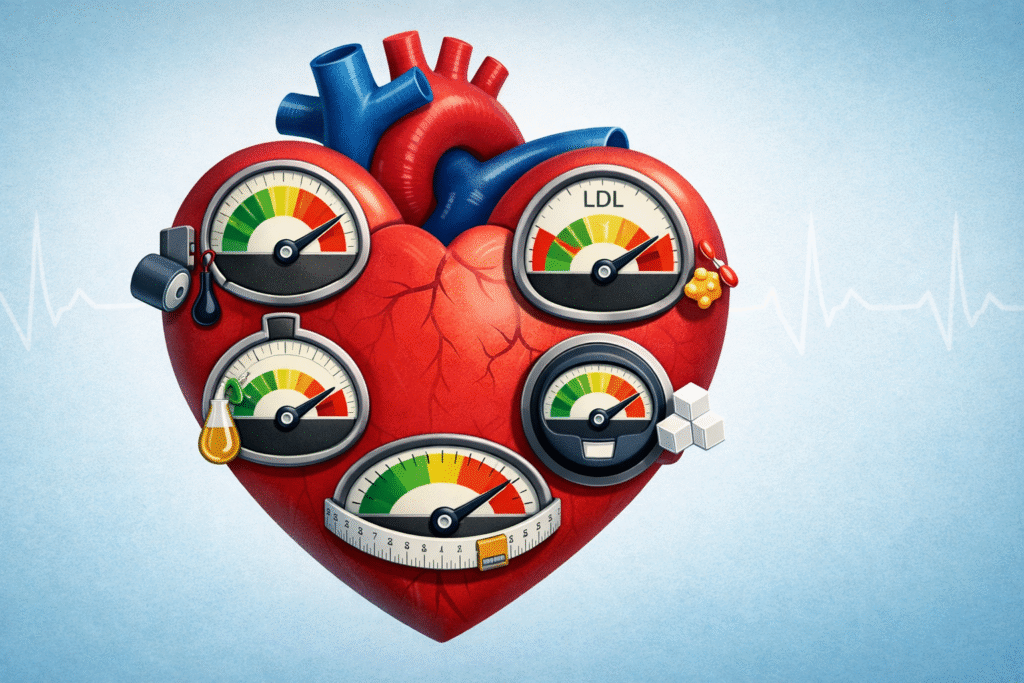
Illustration of a human heart with five gauges representing blood pressure, cholesterol, triglycerides, blood sugar, and waist size
Most of us go through life without giving our hearts much thought — until something goes wrong. But there are five simple numbers that can give you a remarkably clear picture of where you stand. Think of them as a report card for your cardiovascular health. Get these right, and you’re doing a great deal to protect yourself from heart attack and stroke.
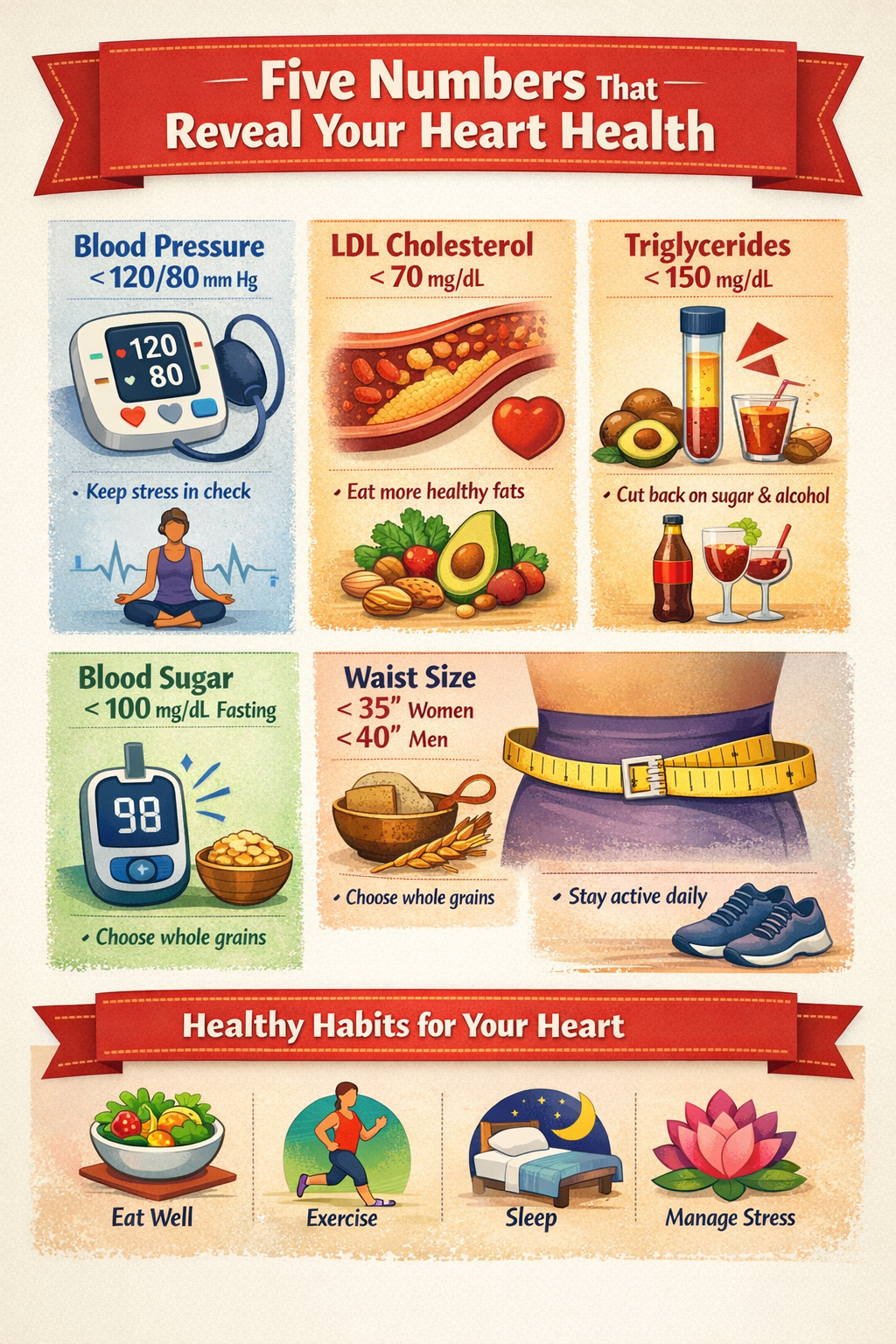
Blood pressure: below 120/80 mm Hg
Every time your heart beats, it pushes blood through your arteries. Blood pressure tells you how hard it’s having to push. The first number (systolic) is the pressure when your heart contracts; the second (diastolic) is when it rests between beats. When your arteries are stiff or narrow, that pressure climbs.
Why does it matter? Persistently high blood pressure damages artery walls, encouraging fatty deposits to accumulate — a process called atherosclerosis. Over time, it forces the heart to work harder than it should, which can eventually lead to heart failure. It also significantly raises your risk of stroke.
What helps: Eat more potassium-rich foods — vegetables, fruit, beans — and cut back on sodium, which hides in most processed and restaurant food. Alcohol is worth limiting too.
LDL cholesterol: below 70 mg/dL
When your doctor orders a cholesterol test, the number they’re watching most closely is LDL — the so-called “bad” cholesterol. These are particles that carry cholesterol through the bloodstream, and when there are too many of them, they begin to burrow into artery walls. White blood cells then swallow them up, forming the fatty deposits at the heart of atherosclerosis.
What helps: Reduce saturated fat — found in meat, dairy, and eggs — and replace those calories with unsaturated fats from nuts, seeds, and vegetable oils.
Triglycerides: below 150 mg/dL
Less talked about than cholesterol but just as important, triglycerides are the most common form of fat circulating in your blood. Your body makes them from excess calories, alcohol, and sugar it has no immediate use for, storing them in fat cells for later. Elevated levels are linked to the same risks as high LDL: heart attack and stroke.
What helps: Cut back on foods high in unhealthy fats or sugar; eat more oily fish, which is rich in omega-3 fatty acids; and go easy on alcohol.
Blood sugar: below 100 mg/dL (fasting)
High blood sugar is the defining feature of diabetes, and Type 2 diabetes — by far the more common form — develops when the body stops responding properly to insulin, the hormone that helps cells absorb sugar from the blood.
For your heart, chronically elevated blood sugar is quietly destructive. It damages blood vessel walls, makes LDL particles more likely to oxidise and stick to arteries, and causes platelets — the tiny cell fragments involved in clotting — to become stickier than they should be. That combination significantly raises the odds of a heart attack or stroke.
What helps: Cut sugary drinks and heavily processed foods; choose whole, unrefined grains over white bread and white rice.
Waist circumference: less than half your height, or under 35 inches for women / 40 inches for men
Measure around your bare abdomen, just above the navel. A large waist is a sign of visceral fat — the kind that wraps around your internal organs rather than sitting just under the skin. This type of fat is particularly troublesome because it actively releases hormones and inflammatory signals that contribute to atherosclerosis.
What helps: Eat fewer calories, particularly from ultra-processed foods loaded with sugar, salt, and unhealthy fats.
The advice that applies to all five
If one or more of your numbers is off, you’re in very good company — the majority of people are in the same position. The reassuring thing is that the same broad habits improve all five measures at once: a largely plant-based diet, at least 30 minutes of moderate exercise on most days (a brisk walk is perfectly sufficient), seven to eight hours of sleep a night, and keeping stress in check. None of it is dramatic. But done consistently, it adds up to something that genuinely matters.