In early January, as the world was still absorbing the shock of US special forces snatching Venezuelan President Nicolas Maduro from Caracas, a very different kind of alarm was going off in Copenhagen.
Danish military planners, watching US President Donald Trump’s Greenland rhetoric escalate from bluster to something that looked increasingly operational, had begun making quiet preparations for a scenario that would have been unthinkable even a year earlier: that the United States of America might attempt to seize a territory belonging to a Nato ally by force.
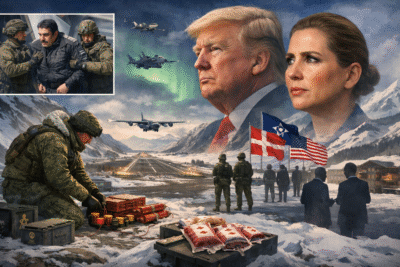
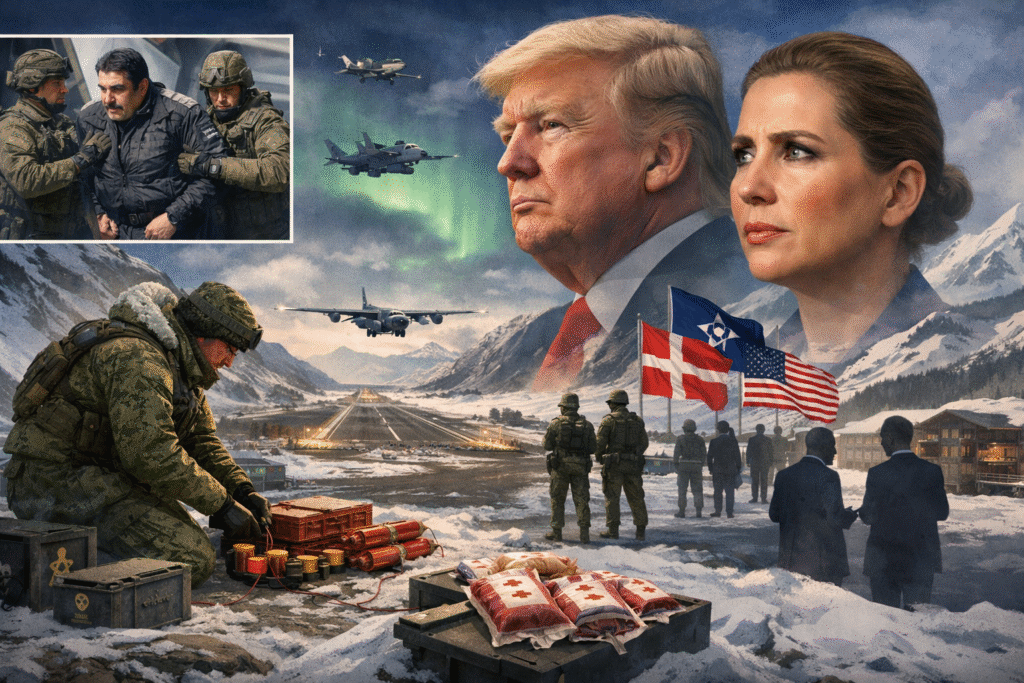
What followed — explosives pre-positioned near Greenland’s main runways, blood supplies flown in for potential combat casualties, and a sudden “military exercise” that was, in reality, a deterrence operation — is only now coming to light, reported by Denmark’s public broadcaster DR and confirmed to the Financial Times by European officials.
“We were very worried this was going to go really wrong,” one European official told the FT.
The Maduro moment
The Maduro capture was the inflection point.
On 6 January, US forces seized the Venezuelan president in an operation that stunned governments across the world — not just because of its audacity, but because of what it implied. If Washington was willing to conduct a unilateral military operation to remove a foreign leader from his own country, what did that say about the limits of Trump’s ambitions elsewhere?
Two days later, Danish Prime Minister Mette Frederiksen delivered the most direct warning of her tenure. A US attack on a Nato ally, she said, “would mean the end of the alliance.” She went further: “The international community as we know it, democratic rules of the game, Nato, the world’s strongest defensive alliance — all of that would collapse if one Nato country chose to attack another.”
It was a remarkable statement. Denmark was, in effect, publicly warning its most powerful ally that there were lines it could not cross — while privately preparing for the possibility that Trump might cross them anyway.
Explosives at the runway
Denmark’s preparations, as DR reported, were grimly practical. Enough explosives were dispatched to destroy the main runways at Nuuk — Greenland’s capital — and at the former fighter base at Kangerlussuaq. The logic was straightforward: if US forces attempted to land in force, Denmark could deny them their primary points of entry from the air.
Blood supplies were also sent — enough to support a combat medical operation. The Danish troops who arrived in Greenland that month for what was publicly described as a military exercise were, sources told DR, part of a broader deterrence architecture designed to signal to Washington that Denmark took the threat seriously and was prepared to act.
None of this was announced. None of it was meant to be. The public exercise was the visible layer; the explosives and the blood were the layer beneath it.
The Davos deal
The crisis did not end with Danish explosives or Frederiksen’s warning. It ended, as so many Trump-era confrontations do, with a deal.
At the World Economic Forum in Davos later in January, Nato Secretary General Mark Rutte struck what was described as “a framework of a future deal” with Trump — one that gave Washington significantly more of what it wanted in Greenland without requiring it to take anything by force.
The deal expanded US troop access to the island, accelerated Washington’s access to Greenland’s vast critical mineral reserves, and enhanced Nato’s broader presence in the Arctic — a region that has quietly become one of the most strategically contested spaces on the planet as melting ice opens new shipping lanes and exposes untapped deposits of rare earth minerals, oil, and gas.
For Trump, it was a win he could point to. For Denmark, it was the outcome it had been buying time for — a diplomatic resolution to a confrontation it had been genuinely preparing to fight.
Why Greenland matters
Greenland is the world’s largest island, covering 2.1 million square kilometres. It sits astride the North Atlantic, between North America and Europe, at the top of the world. The US already has a significant military presence there — Pituffik Space Base, formerly Thule Air Force Base, has been a cornerstone of American Arctic strategy since the Cold War — but Trump has argued that presence is insufficient.
The island also sits atop enormous deposits of rare earth minerals — the raw materials without which electric vehicles, advanced weapons systems, and semiconductor supply chains cannot function. As China controls roughly 60 per cent of global rare earth production, Greenland represents, in the eyes of Washington’s strategic planners, a potential counterweight of enormous value.
Greenland’s population of roughly 56,000 — predominantly Inuit — has been navigating a long path toward greater autonomy from Denmark, and eventual independence is a stated goal of Greenland’s government. Neither Copenhagen nor Nuuk, however, has shown any interest in that independence leading to absorption by the United States.
The precedent problem
What makes the Denmark episode significant is not just the specific story of explosives near a runway in the Arctic. It is what it reveals about the world that Trump’s second term is building.
The Maduro capture demonstrated that the Trump administration was willing to conduct military operations in sovereign countries without warning or authorisation.
The Greenland preparations demonstrated that even America’s closest allies were now conducting contingency planning against the possibility of US aggression. And the Davos deal demonstrated that Trump’s approach — maximalist demands, credible threat of force, eventual negotiated settlement — follows a recognisable and repeatable pattern.
Denmark got its deal. Greenland kept its runways intact. The blood supplies came home unused.
But the explosives had been there. And everyone in the room at Davos knew it.