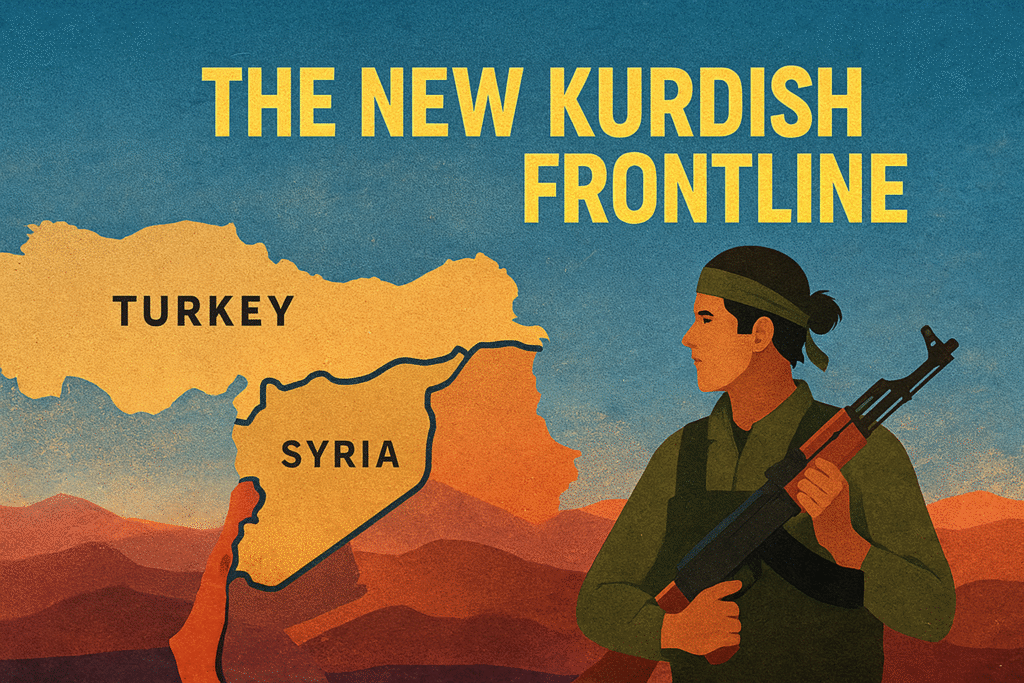
West Asia or the Middle East for the West is witnessing a conflict that has escaped its borders. For decades, Turkey believed it could contain its struggle with the PKK inside its own mountains, villages and southeastern towns. But the collapse of Syria and the rise of Kurdish autonomy next door shattered that assumption. What began in the 1980s as an internal insurgency has now metastasised into a regional standoff involving the US, Russia, Iran, Arab tribes, and multiple Kurdish factions operating across three countries.
Today, the most consequential Kurdish frontline runs through the Syrian towns of Manbij, Kobane and Qamishli.
Militarily, Syria is a battlefield Turkey cannot decisively win; politically, the peace required to end the conflict is one Turkey’s leaders cannot accept without jeopardising their hold on power.
The Roots: How the Kurdish Question Became Turkey’s Unfinished War
To understand why the conflict feels ungovernable today, it’s necessary to return to its origins. The Turkish Republic, founded in 1923 on a unitary, secular and intensely centralised identity project, rejected ethnic pluralism.
Kurds — who form up to a fifth of the population — were expected to assimilate. Their language was banned. Their identity was erased. Rebellions were crushed.
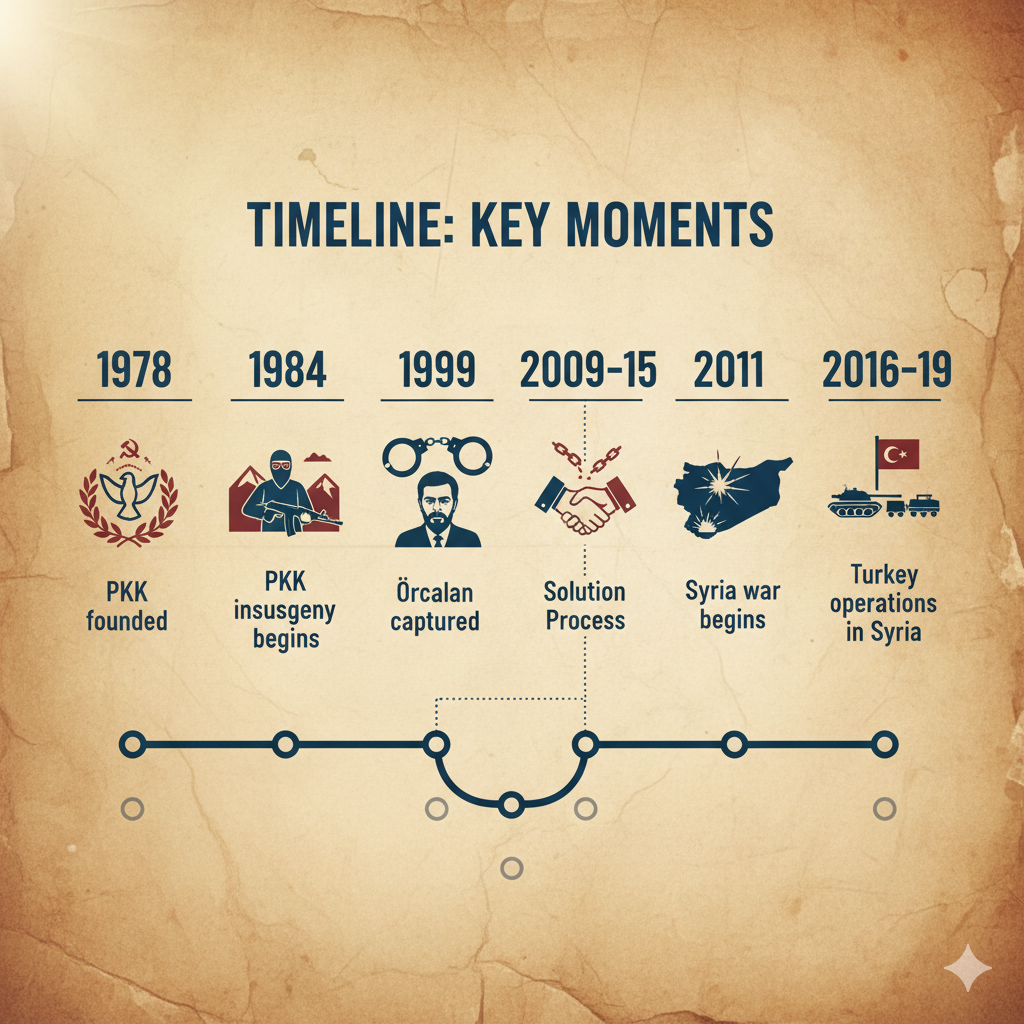
By the time Abdullah Öcalan formed the PKK in 1978, Kurdish frustration had become a combustible mix of marginalisation, militarisation, and cultural suppression.
The Peace Turkey Almost Made — And Why It Collapsed
Between 2009 and 2015, Turkey and the PKK embarked on the most serious negotiations since the insurgency began. The “Solution Process” raised hopes across the region.
But sectarian polarisation, a rising nationalist reflex among security institutions, and Erdogan’s political pivot destroyed that fragile détente.
Then Syria Exploded — And the Kurdish Question Leapt Across Borders
The Syrian civil war transformed everything. As Assad’s forces withdrew from the north, Syrian Kurdish fighters — the YPG — took control of large territories and began building a quasi-state known as Rojava.
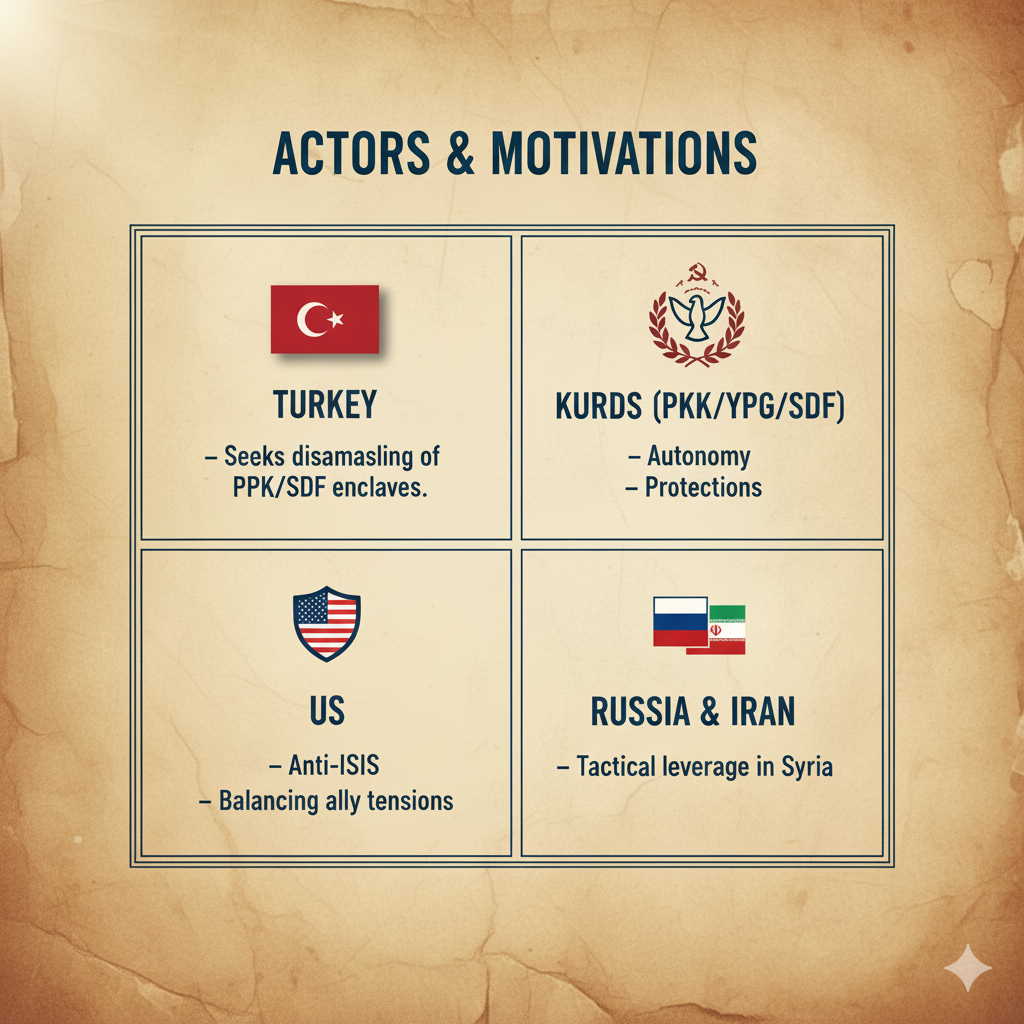
When ISIS emerged, the YPG became America’s indispensable ground force. With US arms and training, it morphed into the Syrian Democratic Forces (SDF) — a multi-ethnic alliance but overwhelmingly Kurdish-led.
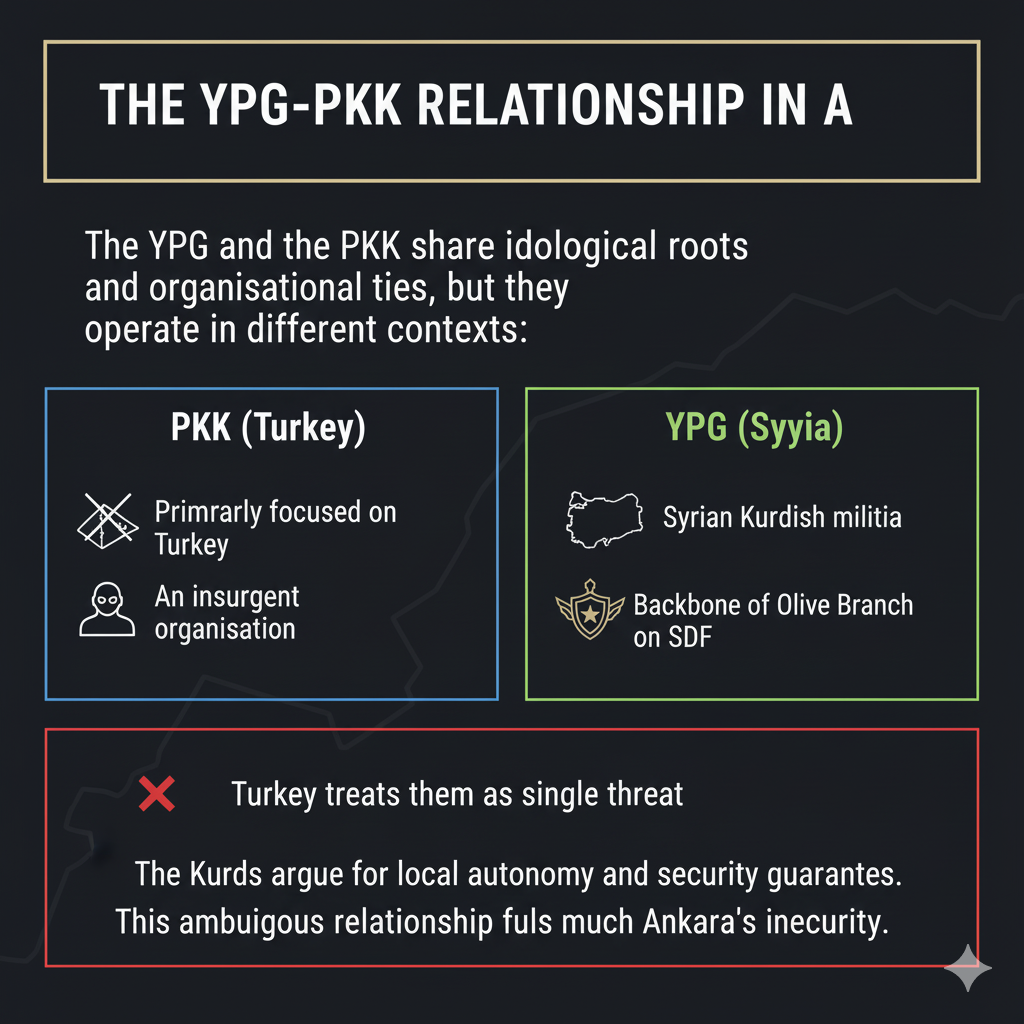
For Turkey, this was the nightmare scenario: a PKK-aligned force on its border, armed and politically empowered by the US.
The New Frontline: Why Turkey Can’t Win the Syrian War
Turkey has launched multiple cross-border operations and controls pockets of territory along the frontier.
Yet despite its firepower, the SDF still controls huge swathes of the northeast, the US protects Kurdish zones east of the Euphrates, and Russia leverages Kurdish groups to pressure Ankara. Each move Ankara makes creates fresh diplomatic and military complications.
The Peace Turkey Can’t Accept
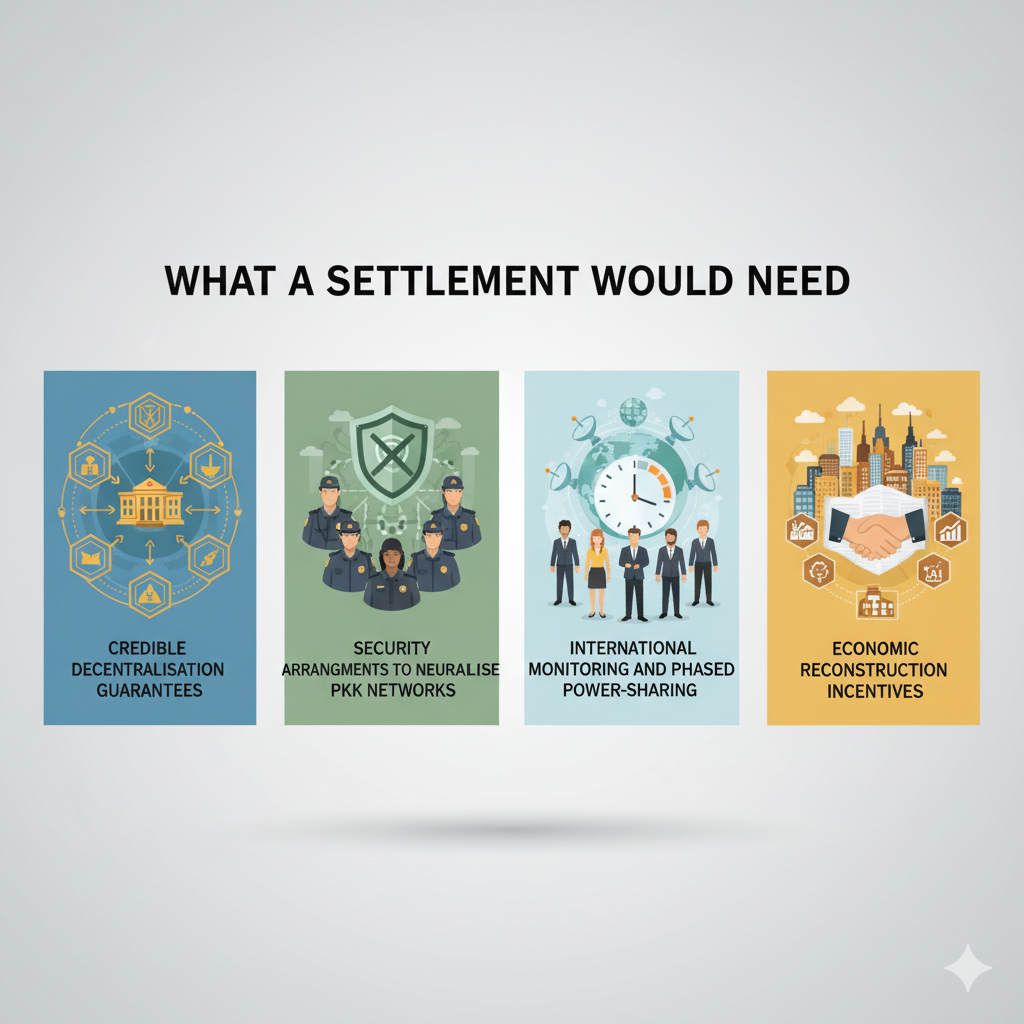
A real settlement would require Kurdish political autonomy, a durable ceasefire with the PKK, decentralisation inside Turkey, cultural safeguards, and guarantees from regional powers.
For Erdoğan and the Turkish security establishment, these terms are politically radioactive.
The domestic political costs are immediate: the far-right coalition would punish any perceived concession; nationalist narratives would intensify; the security state’s legitimacy would be undermined.
The Regional Dominoes: Iran, Russia, Tribes and the ISIS Factor
The Kurdish question is now entangled with almost every major actor in the region: Iran, Russia, Arab tribes within Syrian Kurdish territory, and ISIS remnant cells. Each of these actors benefits when the status quo persists, making a negotiated settlement that much harder.
What Comes Next: A Conflict Without an Endgame
Absent a political settlement, expect a long-term, low-level cross-border confrontation with periodic escalations. The US presence buys time, Turkey’s operations buy leverage, and Russia and Iran buy influence — but no actor has the political will to sign a final peace that reconciles Ankara’s demands with Kurdish aspirations.

Finally, The Frontline That Defines Turkey’s Future
The Kurdish frontline in Syria is not just another theatre of war — it is the exposed nerve of a century-old question Turkey has never resolved.
The battleground lies across the border, but the political war is at home. Until Ankara reconciles its nationalism with Kurdish political aspirations, the conflict will keep expanding and returning.